How the Pneumatic Gas Pump Enhances Your HM 400 YD Unit’s Performance
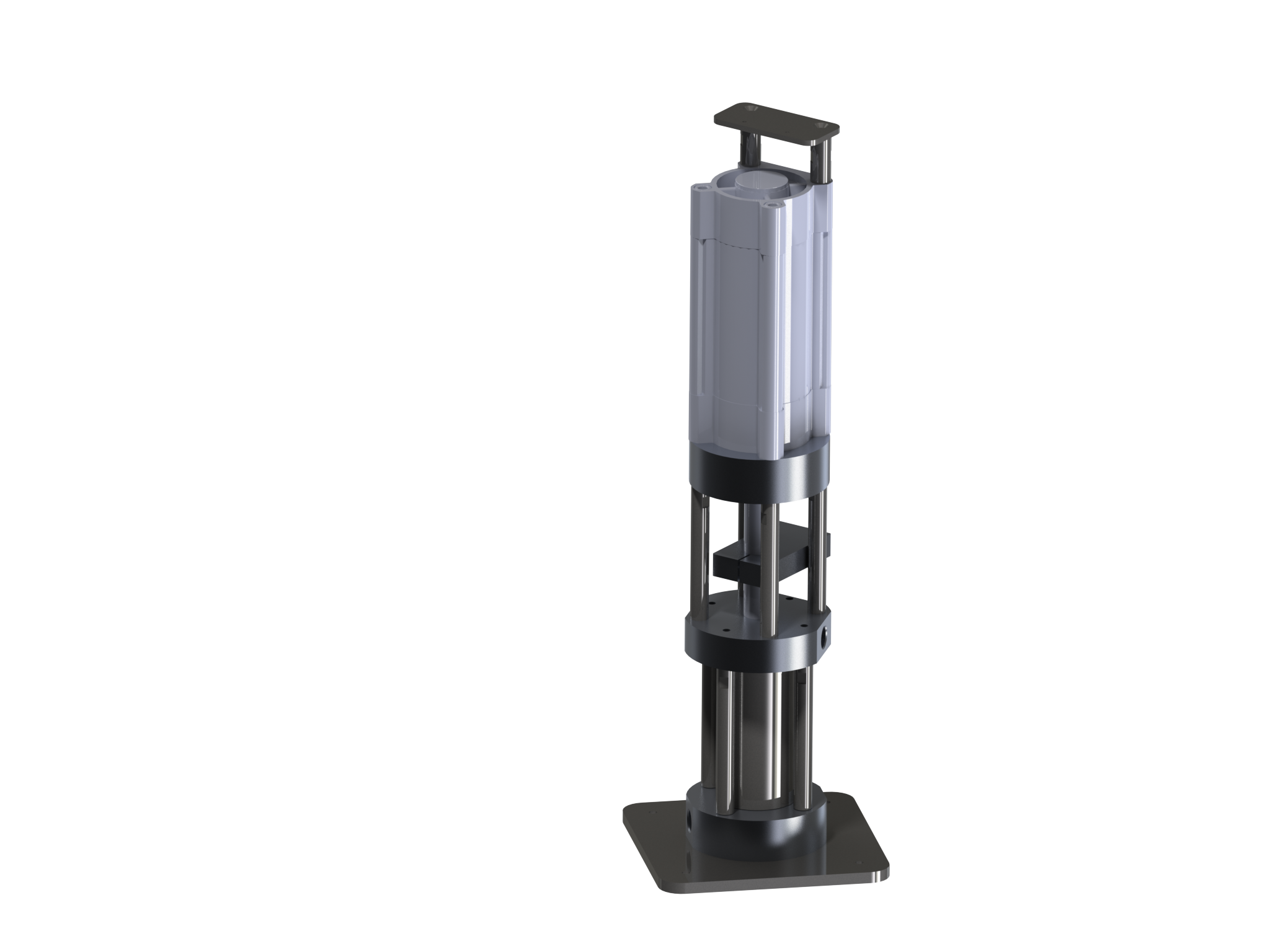
In high-speed aerosol production, the consistency of your propellant is as critical as the product itself. The Pneumatic Gas Pump is an essential auxiliary unit that sits directly on the floor next to your gas storage tanks to ensure your filling line never skips a beat. Its primary role is to convert incoming gas into a stable liquid form before feeding it into the HM 400 YD – Crimping and Gas Filling Unit. I have noticed that many facilities struggle with irregular gas flow, but this pump solves that by activating automatically the moment the main filling unit requires propellant, ensuring a perfectly synchronized supply chain at the machine level.
Efficiency Metrics of the Pneumatic Gas Pump: Technical Advantages for Your Line
- Synchronized Liquid Delivery: The pump only turns on when the HM 400 YD unit is actively filling a container, which prevents unnecessary wear and maintains pressure stability.
- High-Volume Throughput: With a Max Filling Capacity of 25 liters per minute, it easily keeps up with demanding production schedules without becoming a bottleneck.
- Precision Air Pressure Control: Operating at a steady Air Pressure of 6 kg/cm³, it provides the consistent force needed to liquefy gases efficiently.
- Compact Footprint for Tight Floors: Measuring only 30 cm in width and depth, this unit fits into small spaces near your tanks, allowing for a cleaner and safer workspace.
- Lightweight and Portable: At just 20 kg, the unit can be repositioned or serviced with minimal effort, which is a major plus for maintenance teams.
Behind the Pneumatic Power: The Technology of Gas Liquefaction
The core of this system is its pneumatic drive, which I prefer in hazardous gas environments because it minimizes the need for complex electrical components near volatile tanks. The technology relies on a high-efficiency pneumatic cycle that consumes 40 Liters of air per minute to facilitate the phase change of the propellant. Once the gas becomes liquid within the unit, it is immediately routed to the crimping and filling stage, maintaining the precise physical properties required for a successful aerosol fill.
Where the Pneumatic Gas Pump Fits in Your Industrial Filling Process
You will primarily find this unit integrated into facilities that utilize the HM 400 YD filling platform. It is a staple in sectors such as:
- Aerosol Manufacturing: For handling propellants that must be kept in liquid form during the filling cycle.
- Chemical Packaging: Where volatile gases need to be transferred from bulk storage to precision filling heads.
- High-Speed Filling Lines: Environments where manual gas monitoring is not feasible and automatic synchronization is required.
Real-World Operational Gains: Why Synchronization Matters
From my experience on the factory floor, the biggest headache for managers is often the “lag” between the tank and the filling head. Because this pump is pneumatically synchronized with the gas filling unit, it eliminates the risk of “dry” cycles or pressure drops that can ruin a batch. Furthermore, its low air consumption (40 L/min) means you aren’t overtaxing your facility’s compressor while still achieving a significant 25 L/min output. It is a “set and forget” component that provides the reliability needed for 24/7 operations.
Pneumatic Gas Pump Technical Specification Table
| Feature | Specification |
| Air Pressure Requirement | 6 kg/cm³ |
| Max Filling Capacity | 25 Liters / minute |
| Air Consumption Rate | 40 Liters / minute |
| Unit Weight | 20 kg |
| Dimensions (W x D x H) | 30 x 30 x 65 cm |
| Synchronization Mode | Automatic (via HM 400 YD Unit) |
| Primary Function | Gas-to-Liquid Conversion |