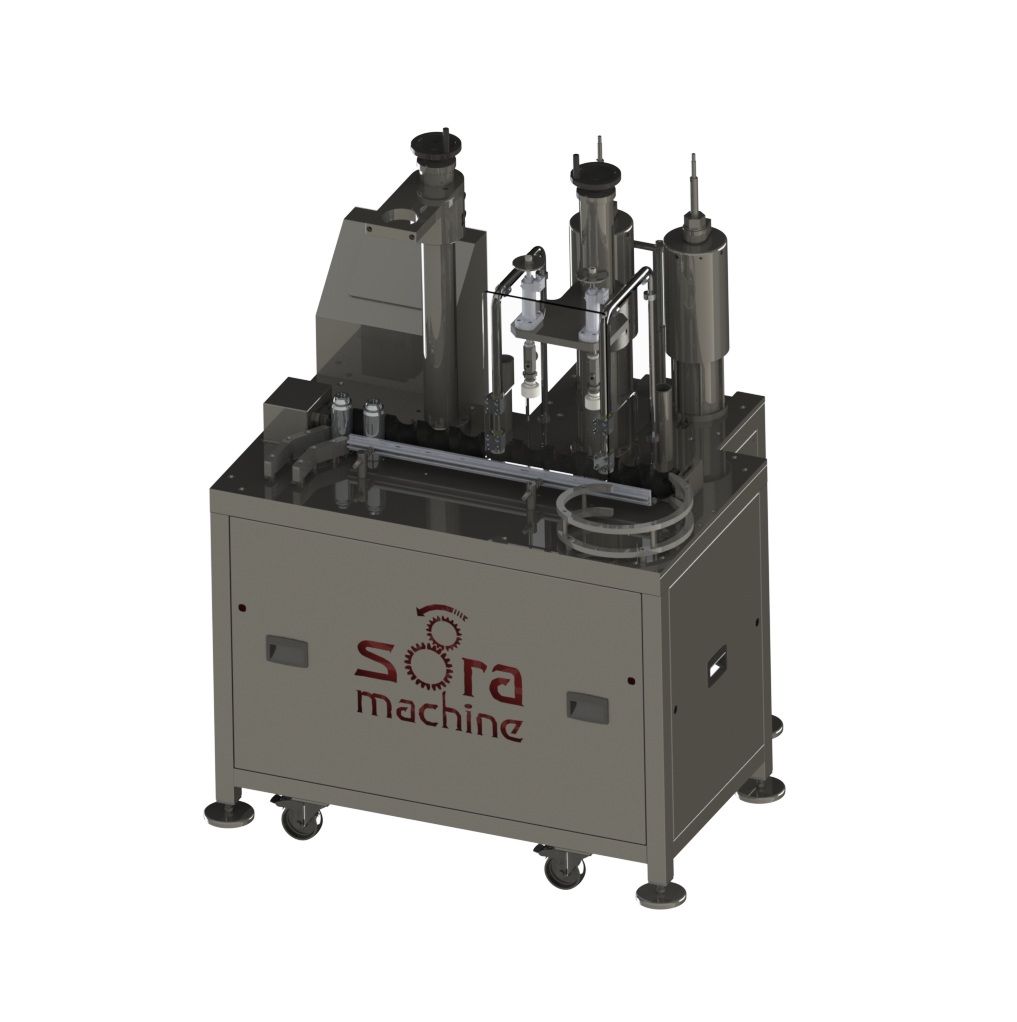
Precision Engineering in Bag-on-Valve Technology: The Semi-BOV Indexing System
When you are looking to scale your aerosol production, the transition to Bag-on-Valve (BOV) technology requires a balance between precision and operational safety. This system is designed as a single head indexing B.O.V crimping and compressed air filling unit, paired with two heads for liquid filling, specifically to handle the delicate nature of separating product from propellant. We have seen that many production bottlenecks happen during the crimping phase, so this unit focuses on precisely setting the height and depth of the 1” valve crimp. This isn’t just about speed—though you can reach up to 10 pieces per minute for 150-200 ml products—it’s about ensuring that the product stays sterile and the air pressure remains consistent throughout the cycle,.
Why BOV Crimping Precision Impacts Your Production Quality
- Dosing Accuracy You Can Trust: With a dosing accuracy of +/- 1%, you minimize product waste and ensure every container meets your quality standards.
- Built for Challenging Environments: The line utilizes ex-proof motors in zones 1 and 2, which is non-negotiable if you are working with potentially volatile materials.
- Material Integrity: Every part that touches your product is crafted from AISI 316 or AISI 304 stainless steel, preventing corrosion and ensuring longevity in pharmaceutical or cosmetic applications,.
- Static Management: To avoid those annoying discharge issues on the line, we’ve ensured that scrolls, change parts, and guide rail covers are all made from anti-static materials.
- Rapid Setup Changes: The quick-setting features for crimp diameter and depth allow your team to switch between different product runs without losing hours to recalibration.
The Core Technologies Behind Efficient BOV Filling
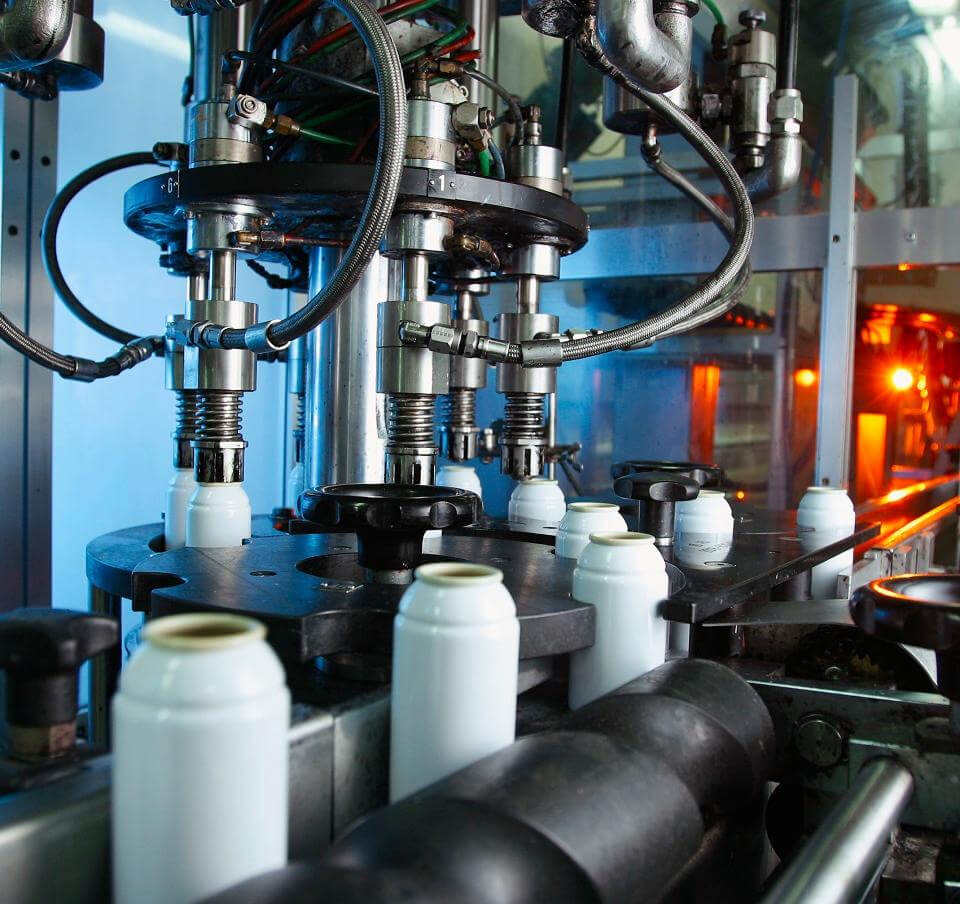
The heart of this system lies in its full pneumatic working piston pressure groups, which provide the muscle needed for consistent filling without the complexity of purely electronic drives. For the operator, the HMI control panel acts as the brain, allowing for intuitive adjustments. We also integrated a helix conveyor for automatic can transfer, which keeps the indexing smooth and prevents the typical “can-clumping” seen in manual feed lines. During the crimping process, the unit simultaneously fills the can with the required amount of compressed air, streamlining what used to be a multi-step process into a single, synchronized motion.
Industrial Applications and Material Compatibility
If you are managing a facility that produces high-end cosmetics, medical sprays, or specialized food products, the AISI 304/316 construction is your best friend for meeting hygiene standards,. The two-head liquid filling system, featuring a 300 ml capacity cylinder, is specifically developed for quick filling cycles where product purity is paramount. It is worth noting that while the technical demonstration pictures might vary slightly from the final build, the core AISI construction remains the baseline for all industrial units.
Operational Benefits for Your Floor Managers
One of the biggest headaches in aerosol production is the “fine-tuning” phase. We’ve addressed this by making the can height and weight adjustments easy and accessible, so your technicians aren’t struggling with specialized tools every time a new container size comes in. Safety isn’t an afterthought here; all cabinets are equipped with dedicated on/off switches, and the adjustable air pressure settings give you total control over the filling environment,. This system is about giving you the confidence that your 220V AC setup can handle a steady 1,5kw load without hiccups.
Technical Specifications
| Feature | Industrial Specification |
| Production Speed | Up to 10 pcs/min (150-200 ml) |
| Dosing Accuracy | +/- 1% |
| Liquid Cylinder Capacity | 300 ml (Two heads) |
| Material Construction | AISI 304 / Product Contact: AISI 316, |
| Power Requirements | 220V AC+N+PE, 1.5kw, 16A |
| Valve Type | Standard 1” B.O.V |
| Safety Rating | Ex-proof Motors (Zone 1 & 2) |
| Control Interface | HMI Control Panel |